


Growing outdoor cannabis seems simple at first glance, but in Central Europe, it is significantly more complex than often assumed. While all parameters can be controlled indoors, outdoors, the interplay of climate, location, and soil plays the decisive role. This is precisely why a structured approach is necessary to achieve stable results.
Anyone who understands and purposefully implements the basics can not only grow successfully outdoors but also achieve reproducible harvests in the long term.
Cannabis Strains for Outdoor: Autoflower vs. Photoperiodic
Choosing the right strain is one of the most important success factors in outdoor growing. Unlike indoors, you can hardly compensate for mistakes here, as time and season are limited.
Autoflowering Cannabis in Outdoor Cultivation: Advantages and Limitations
Autoflowering strains have the advantage of flowering regardless of day length. This allows for multiple cycles within one season, which is a great advantage, especially in Central Europe.
An early start in spring allows for a harvest as early as mid-summer, with further runs possible in June or July. This spreads the risk and makes you less dependent on a single harvest in autumn.
At the same time, autoflowering plants have a limited life cycle. Mistakes in the first few weeks directly affect the entire grow, as the plant has little time to recover. Therefore, a stable start is crucial.
Photoperiodic Cannabis Strains Outdoors: More Yield, Higher Risk
Photoperiodic strains offer significantly more growth potential. Due to their longer vegetative phase, they develop larger plants, stronger roots, and often more intense terpene profiles.
The disadvantage lies in the timing: flowering usually begins only towards the end of summer, falling into a period of higher humidity. This significantly increases the risk of mold.
In practice, this means that photoperiodic plants are particularly useful when location, air circulation, and care are optimally coordinated.
Choosing an Outdoor Location: Sun, Air Circulation, and Microclimate
A good location often determines success more than the chosen genetics. This is not just about as many hours of sunshine as possible, but about the entire microclimate of the plant.
Morning Sun in Outdoor Grow: Why it is Crucial
During the night, moisture accumulates on the plants. Without direct sunlight, this moisture persists for a long time and can lead to mold formation.
A location with early sun exposure ensures that the plants dry quickly. This significantly reduces the risk and simultaneously activates the plant's metabolism early in the day.
Air Circulation and Wind: Natural Protection Against Mold
Besides light, air movement also plays a central role. A slightly windy location helps to dissipate moisture faster and at the same time strengthens the plant structure.
Completely wind-protected areas may seem pleasant, but often lead to stagnant air and increase the risk of diseases.
Heat and Direct Sun: When Too Much Light Becomes a Problem
Cannabis needs a lot of light but is sensitive to extreme heat. Especially in mid-summer, very high temperatures can cause the plant to reduce its metabolic processes.
In such phases, light shading can be useful to avoid stress and maintain consistent development.
Preparing Outdoor Soil: Optimizing Soil Quality and Substrate
The soil is the foundation for any outdoor plant. However, natural soils are often not optimally structured and require adjustments to deliver good results.
Preparing the Planting Hole: Why Loose Soil is Crucial
Loose soil allows roots to spread freely. Compacted soil, on the other hand, leads to restricted growth and poor nutrient uptake.
Digging a larger planting hole not only creates space but also allows for targeted improvement of the substrate.
Substrate Mix in Outdoor Grow: Structure, Nutrients, and Drainage
A good mix combines several factors: it stores water, remains loose, and continuously supplies the plant with nutrients.
Organic components like worm castings improve soil quality in the long term, while structural materials like perlite or pumice ensure sufficient oxygen in the root zone.
Soil Life and Microorganisms: Invisible Success Factor
Active soil life ensures that nutrients are made available and can be absorbed efficiently. Microorganisms play a central role in this, as they support processes that cannot be achieved with purely mineral supply.
Especially in outdoor growing, where many factors cannot be controlled, a stable microbiome helps to make the plant more resilient.
Growing Cannabis Outdoors in Pots: Size, Advantages, and Typical Mistakes
Not every grow takes place directly in the ground. Pot cultivation offers more flexibility but also brings its own challenges.
The Right Pot Size for Outdoor Grow
Sufficient volume is crucial for stable conditions. Small pots dry out faster and are more sensitive to temperature fluctuations.
Larger containers offer more buffer and allow for more consistent plant development.
Drainage and Avoiding Overwatering
Waterlogging is one of the most common problems in pots. A drainage layer at the bottom ensures that excess water can drain off and the roots do not stand in water permanently.
Controlling Temperature in the Pot
Dark pots can heat up significantly in the sun. This creates stress in the root area, which can impair growth. Especially in mid-summer, fabric pots have clear advantages here as they do not overheat as quickly.
Light materials or light shading help to keep the temperature stable.
Growth Phase of Outdoor Cannabis: Structure and Development
The vegetative phase lays the foundation for later flowering. Mistakes in this phase can hardly be corrected later.
Stable Start: Why Young Plants Should Be Protected
Young plants are sensitive to external influences such as cold, wind, or pests. A stable start increases the likelihood that the plants will develop vigorously.
Improving Plant Structure: More Light and Better Air Circulation
Without intervention, many plants grow very compactly or tall. A balanced structure ensures that light reaches all areas and air can circulate better.
This not only reduces the risk of mold but also improves the quality of the flowers.
Outdoor Flowering Phase: Avoiding Mold and Securing Yield
At the beginning of the flowering phase, the plant's sensitivity to external influences increases significantly.
Adjusting Nutrient Requirements Correctly in the Flowering Phase
While nitrogen is the focus during the growth phase, the need shifts to phosphorus and potassium during flowering. Incorrect nutrient distribution can negatively affect plant structure.
Defoliation in Outdoor Grow: Deliberately Improving Air Circulation
Dense plants increase the risk of moisture inside the flowers. Targeted defoliation can help improve air circulation and relieve critical areas.
Detecting Mold Early and Reacting Correctly
Mold often develops unnoticed inside the flowers. Initial signs should be taken seriously, as the problem can spread quickly.
Regular inspection and quick action are crucial to avoid major losses.
Cannabis Harvest Outdoor: The Right Time and Process
The harvest time in outdoor growing is often a compromise between optimal ripeness and external conditions.
Determining Trichomes: When is Cannabis Ready for Harvest?
The color and structure of the trichomes provide information about the ripeness of the plant. Milky trichomes indicate the peak of THC concentration, while amber trichomes indicate advanced ripeness.
Weather as a Decisive Factor in Outdoor Grow
Unlike indoor cultivation, bad weather can strongly influence the harvest. Rain periods or high humidity can significantly increase the risk of mold.
In such cases, it is often advisable to harvest a little earlier to ensure quality.
The Right Time of Day for Harvest
Harvesting in the early morning offers stable conditions and spares the plant. Lower temperatures and a calm metabolism can positively affect quality.
Pest Control & Diseases in Outdoor Cannabis Cultivation

Outdoor growing always means working with nature – and therefore automatically being confronted with pests and pathogens. Unlike indoors, the system cannot be completely sealed off, which is why prevention is significantly more important than mere control.
Recognizing Common Pests in Outdoor Grow
Typical problems in outdoor cultivation include fungus gnats, aphids, spider mites, or thrips. While some pests mainly attack the leaves, others can weaken the root system or the entire plant structure.
The actual problem is often not the individual pest, but the imbalance in the system. Weakened plants are significantly more susceptible and provide ideal conditions for rapid spread.
Why a Strong Soil Life is Crucial
A stable outdoor grow does not begin with pest control, but with plant health. This is where soil life comes in. Microorganisms ensure that nutrients are efficiently available and at the same time support the plant's natural defense mechanisms.
A plant with an active microbiome is more resilient to stress, recovers faster, and is significantly less likely to be targeted by pests.
Prevention Instead of Reaction: The Decisive Difference
Many growers only react when a problem becomes visible. In practice, however, it is much more effective to create stable conditions from the outset.
This includes a airy location, a healthy soil structure, and consistent nutrient supply. A balanced plant structure with good air circulation also significantly reduces the risk, as pests and pathogens are less likely to establish themselves.
Diseases in Outdoor Grow: Mold as the Biggest Risk
The biggest danger in outdoor cultivation remains mold, especially in the flowering phase. High humidity, dense flowers, and poor air circulation create ideal conditions for fungal infections.
The problem is that mold often develops inside the flowers and only becomes visible late. Therefore, regular inspection of the plants is all the more important, especially during humid weather conditions.
Strategies for Natural Pest Control
Instead of relying on aggressive agents, outdoor cultivation works better in the long term with a stable, biological system. This includes active soil life, a healthy plant structure, and an environment that supports the balance between plant and environment.
Products and methods should always aim to stabilize the system – not to "oversteer" it in the short term. This is precisely where the advantage of a holistic approach over isolated individual measures becomes apparent.
Fertilizing Outdoor Cannabis: Nutrient Supply in a Natural System
Fertilization in outdoor growing differs fundamentally from indoor cultivation. While indoor often involves precise fertilization according to a schedule, outdoors, the interplay of soil, microorganisms, and organic matter plays the decisive role.
Why Organic Fertilization is Superior Outdoors
In outdoor cultivation, one ideally works with nature, not against it. Organic fertilization ensures that nutrients are not immediately available, but are gradually broken down by microorganisms.
This leads to a more even supply, reduces the risk of over-fertilization, and simultaneously supports the development of stable soil life.
The Role of Microorganisms in Nutrient Uptake
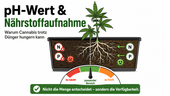
Plants do not simply absorb nutrients directly from the soil. A large part is only converted into a plant-available form by microorganisms.
An active microbiome therefore not only improves the efficiency of fertilization but also ensures that the plant is continuously supplied – even under changing conditions.
Using the Organic Line Effectively in Outdoor Grow
A holistic system like the Organic Line addresses precisely this. Instead of supplying isolated nutrients, the entire soil ecosystem is supported.
Specifically, this means:
- Promotion of soil life
- sustainable nutrient release
- stable plant development throughout the entire cycle
Especially in outdoor growing, where many factors are uncontrollable, such a system provides significantly more stability and predictability.
Understanding Nutrient Requirements Throughout the Grow
The plant's needs change throughout its life cycle. In the growth phase, the focus is more on nitrogen, while in flowering, more phosphorus and potassium are needed.
An organic system adapts to these changes naturally, as nutrients are continuously provided without creating strong fluctuations.
Avoiding Typical Mistakes in Outdoor Fertilization
One of the most common mistakes is overly aggressive fertilization. Especially in outdoor areas, this can quickly lead to imbalances that negatively affect the entire system.
Equally problematic is passive soil without active life. Without microorganisms, many nutrients remain unused, which can lead to deficiency symptoms – even if enough fertilizer is present.
Conclusion: Successfully Growing Outdoor Cannabis in Central Europe
Outdoor cannabis cultivation is not a random product, but the result of a well-thought-out interplay of several factors. Those who coordinate genetics, location, soil, and timing can achieve stable results even under difficult conditions.
With the right understanding, outdoor growing becomes not only predictable but also reproducible in the long term – and that is the decisive difference between luck and a system.

Community voices
No public comment yetBe the first to share your view. Did this article help you or is something still missing?